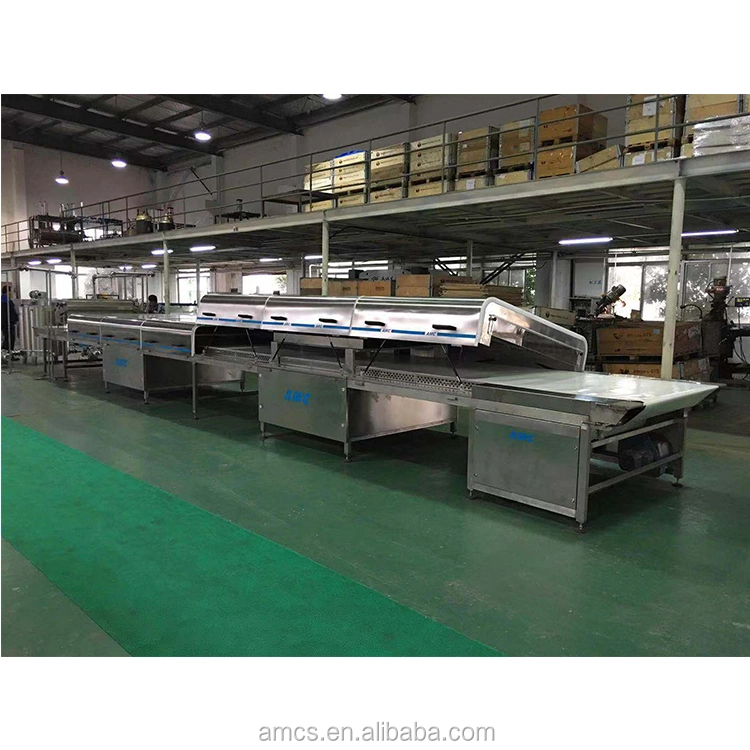












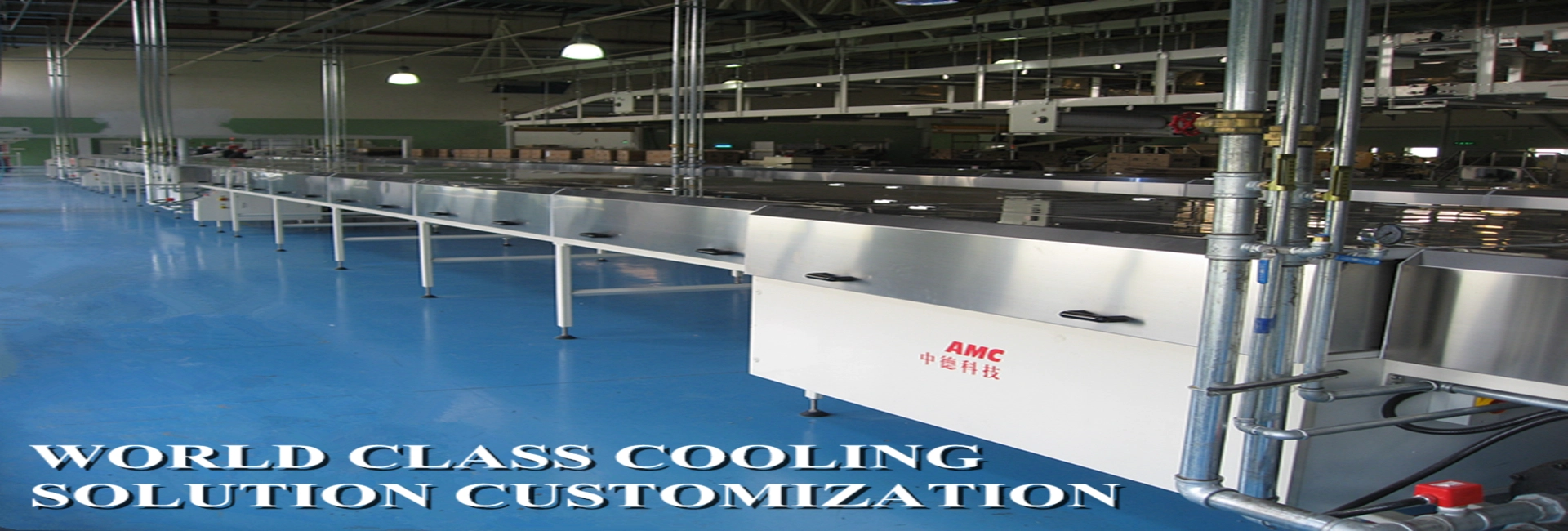

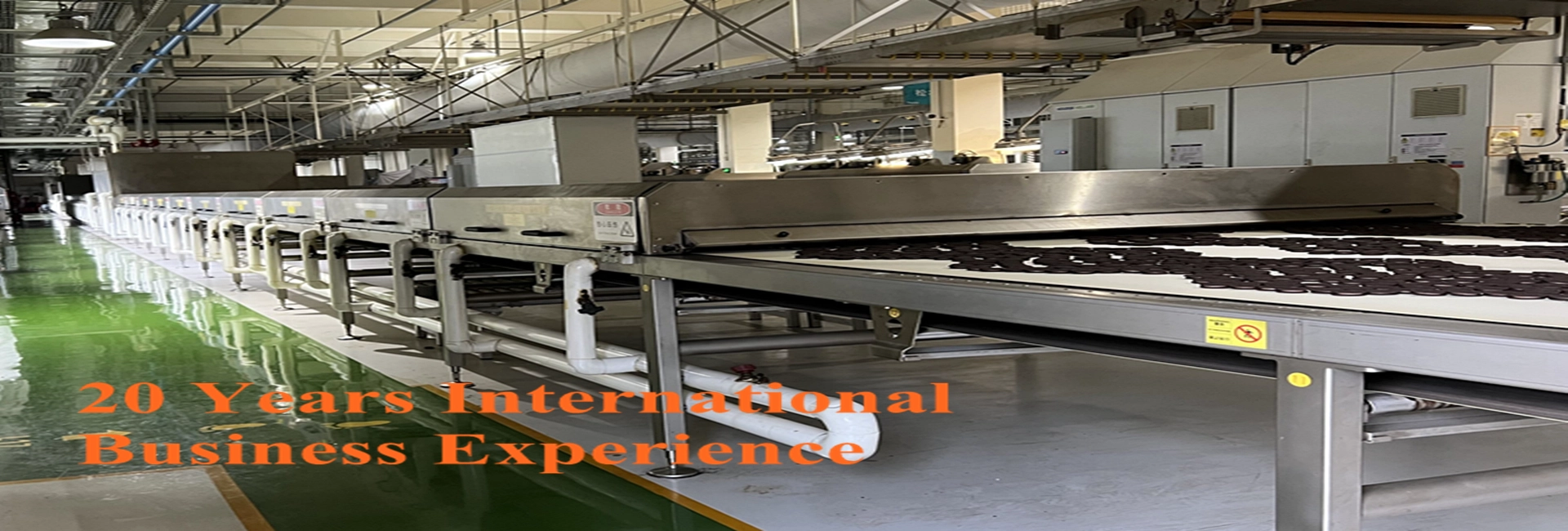
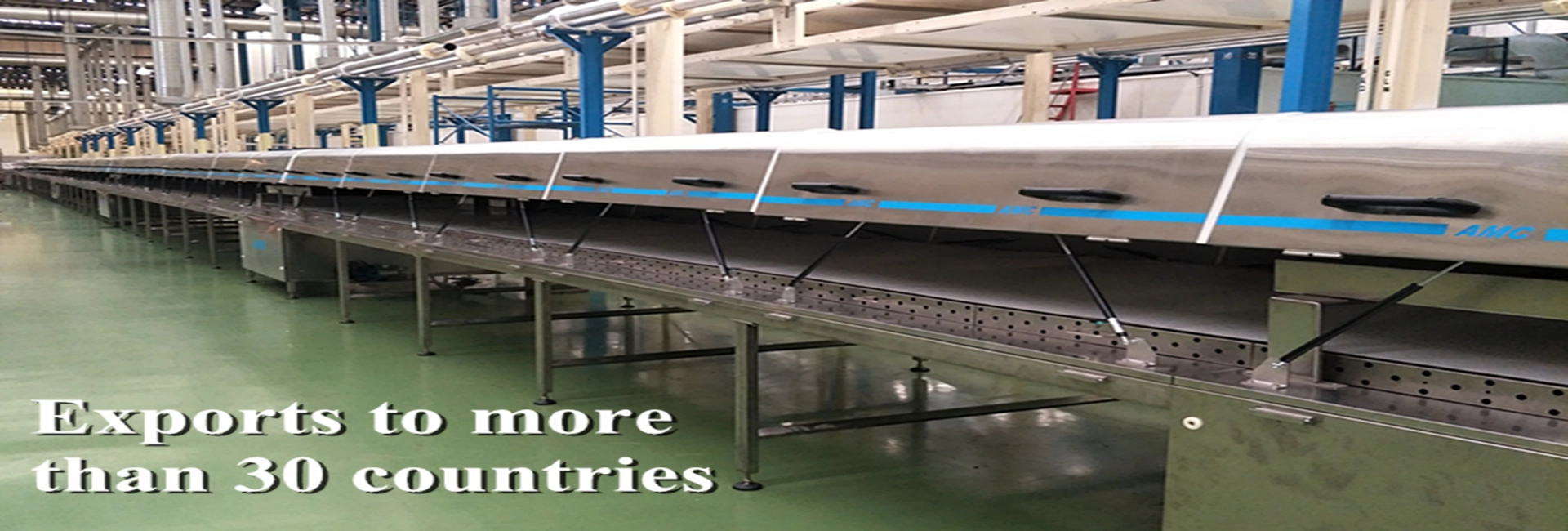



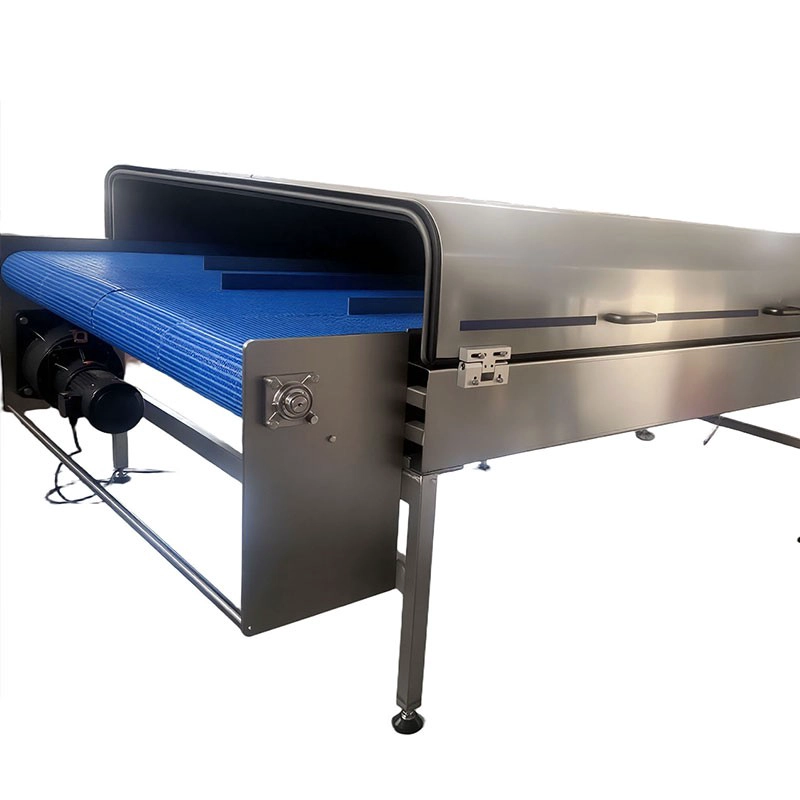
What is a cooling tunnel and how does it work for chocolate?
A chocolate cooling tunnel has three essential tasks
1. Remove heat at a controlled rate – not too fast, not too slow
2. Never let the product surface reach the dew point of the surrounding air
3. Give the product enough time to set fully before it exits
Step-by-Step Working Principle
Step 1: Product Entry
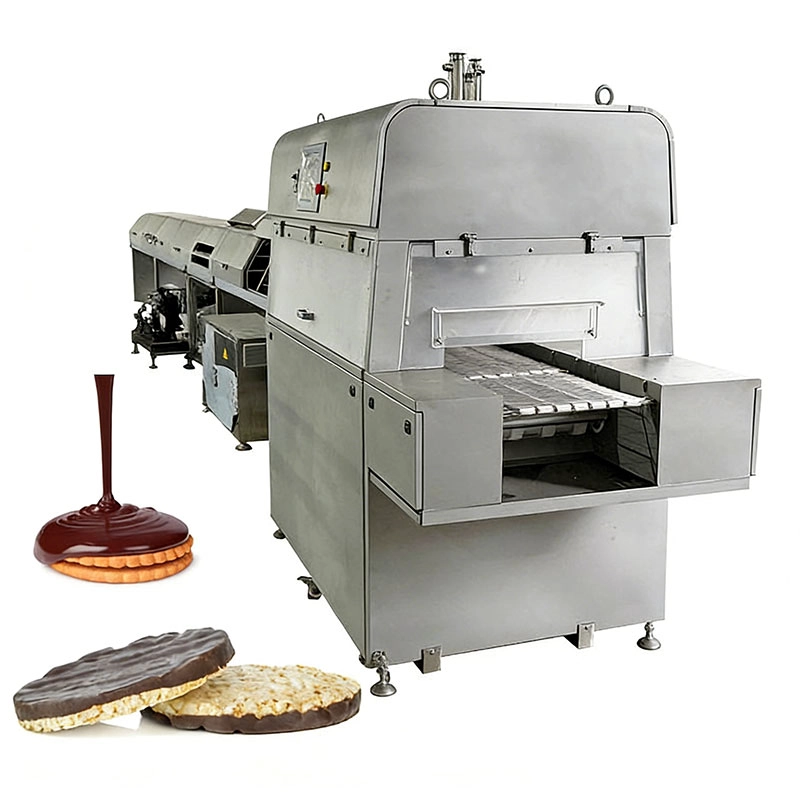
Freshly enrobed or molded chocolate products enter the cooling tunnel on a conveyor belt. The chocolate is still warm and liquid at this stage—typically around 30°C for molded products.
Step 2: Zoned Cooling
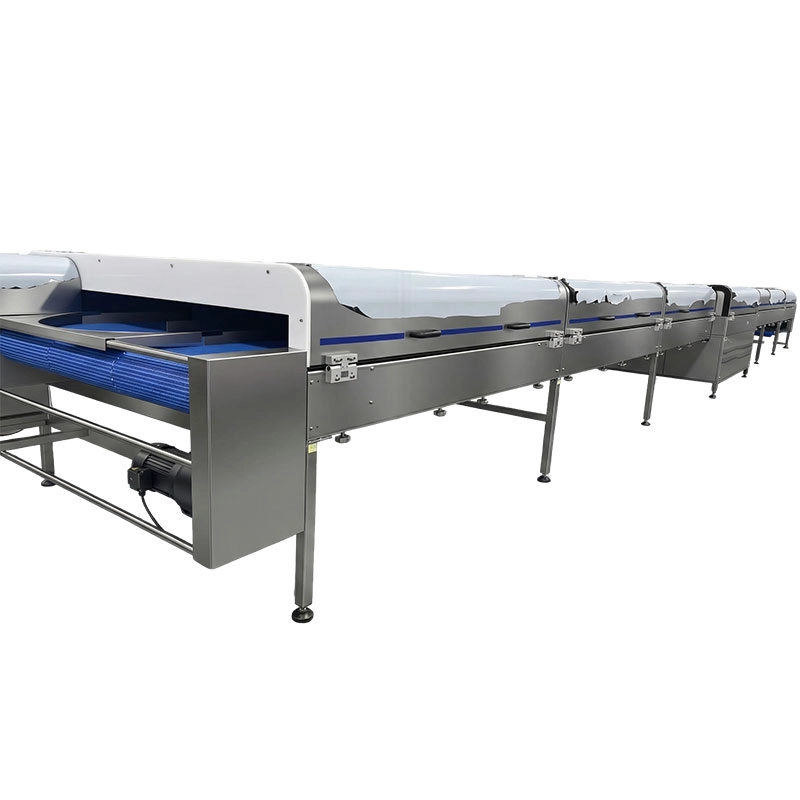
A high-quality cooling tunnel for chocolate cools in stages, not with one cold blast. The tunnel is divided into multiple cooling zones, each with its own temperature settings.
Step 3: Heat Transfer Mechanisms
Modern chocolate cooling tunnels employ Convection, Radiation, Conduction three heat transfer methods.
High-performance tunnels combine radiation and convection cooling from above with cold water contact cooling from below. This combination ensures uniform cooling and optimum quality in the shortest possible time.
Step 4: Crystallization and Solidification
As the chocolate cools, cocoa butter crystallizes into its stable form (Form V). This is the most critical step for product quality. To cool and crystallize just 1 gram of chocolate, approximately 75 Joules of heat energy must be removed.
Step 5: Product Exit
Properly cooled chocolate exits the cooling tunnel with a glossy finish, clean snap, and stable shelf life. The product is now ready for demoulding, packaging, or further processing.