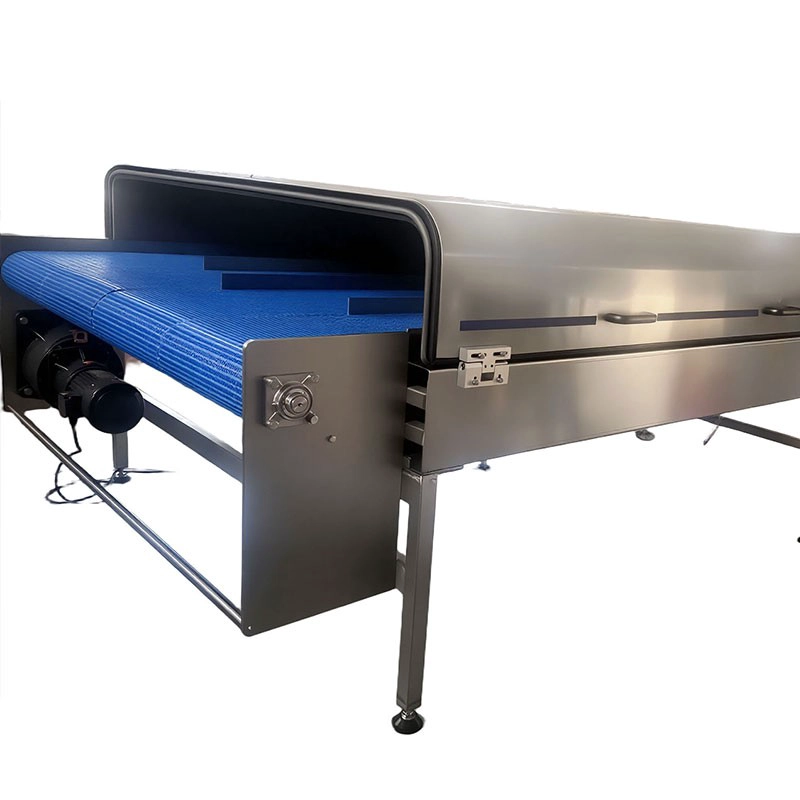
The Advantages and Limitations of Combined Cooling
AMC
AMC
2026-10-20 15:09:06
Advantages of Combined Cooling
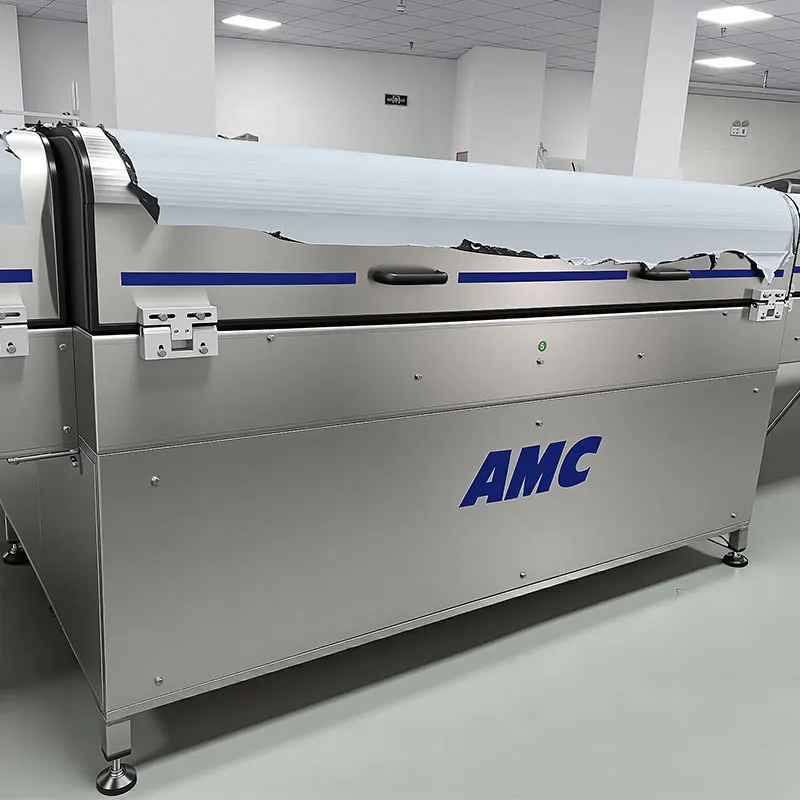
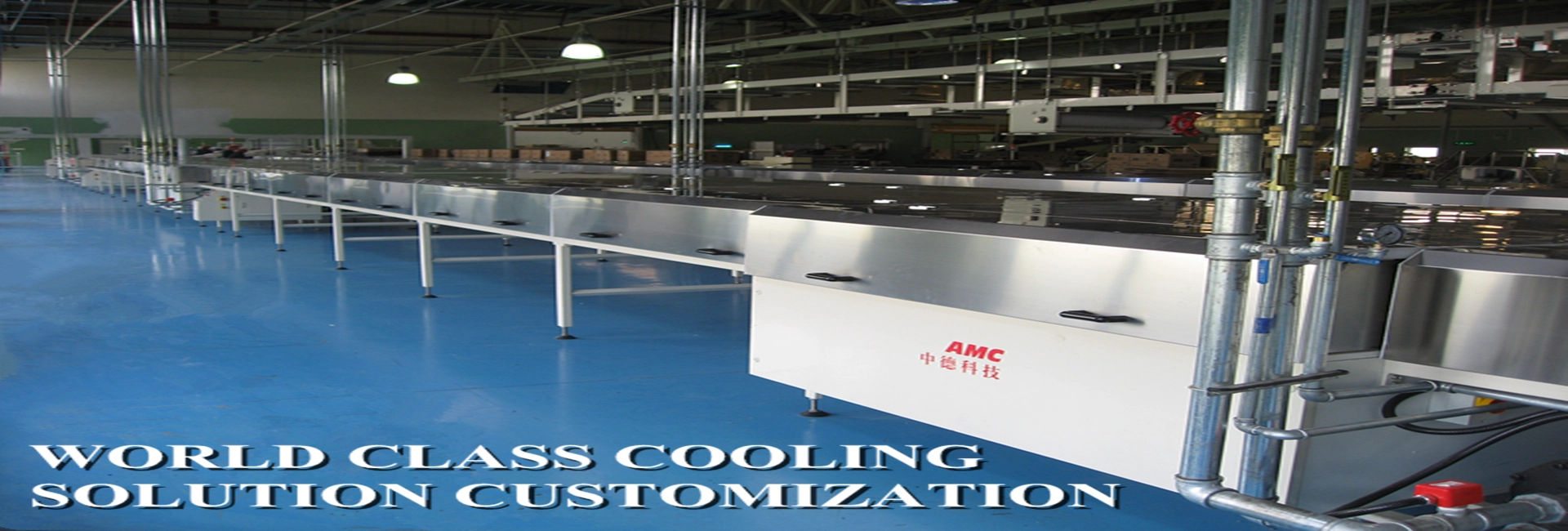
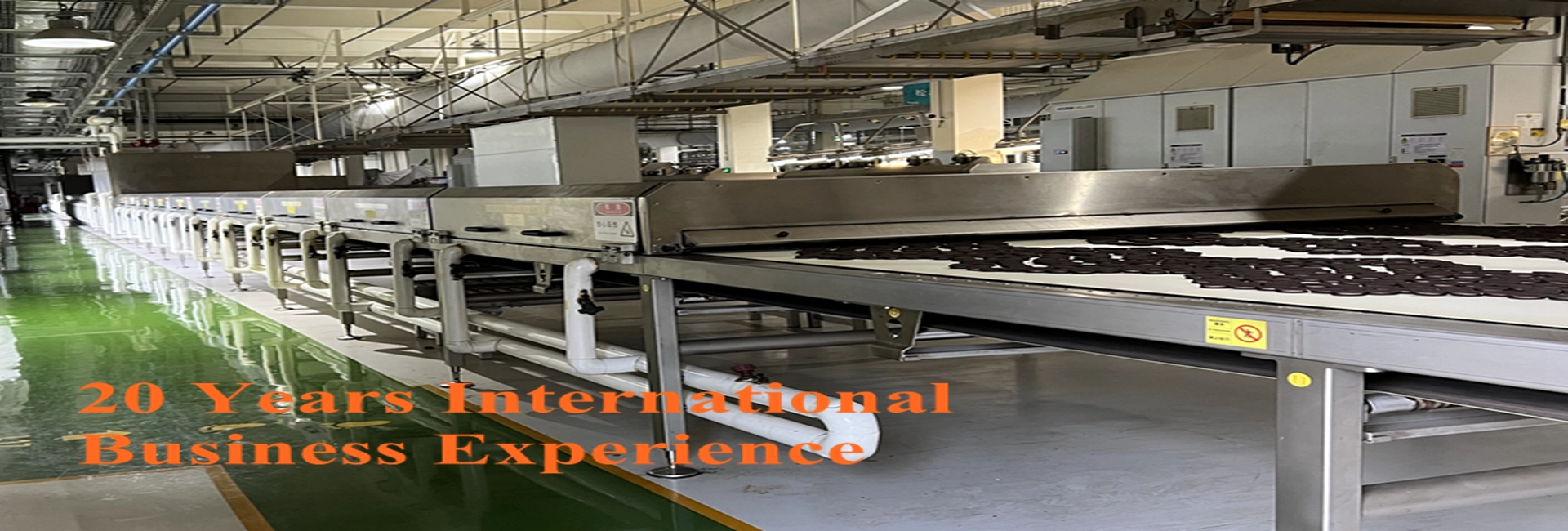
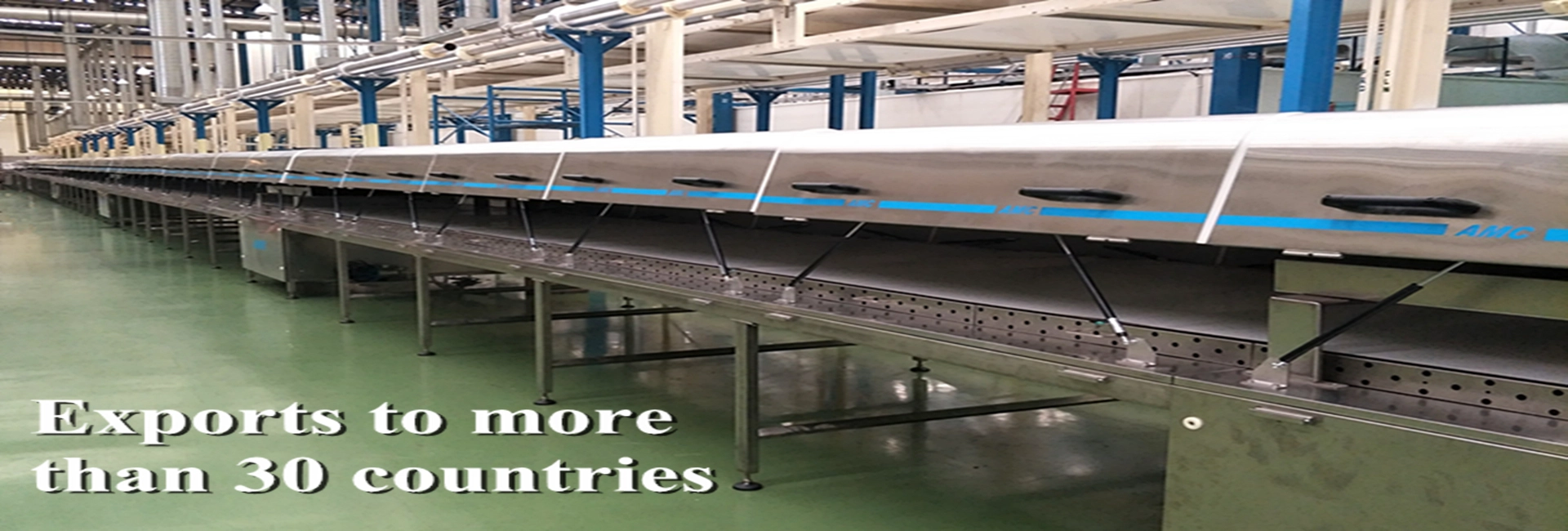
- Optimized cooling efficiency. By combining air convection from above with water contact cooling from below, the system achieves faster and more uniform cooling than either method alone.
- Flexibility. Hybrid systems can adapt to varying product requirements and ambient conditions. Operators can select the optimal operating mode based on seasonal temperature changes.
- Reduced water consumption. Compared to pure water cooling systems, hybrid designs significantly reduce water usage while maintaining cooling performance, making them ideal for water-sensitive regions.
- Solves slow cooling and color change issues. Combined systems address the problems of slow cooling speed and color change associated with traditional air cooling, achieving rapid and uniform cooling of food products.
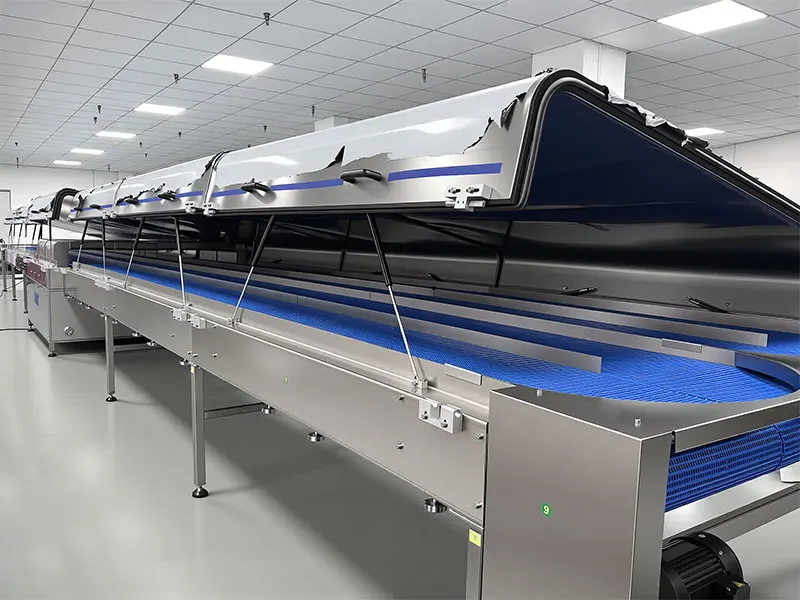
Limitations of Combined Cooling
- Higher capital cost. The complexity of integrating two cooling systems increases initial investment.
- More complex maintenance. The system requires both air-side and water-side maintenance protocols, including water treatment, descaling, and fan maintenance.
- Larger footprint than pure water cooling. The dual system requires more space than a standalone water cooling tunnel.