
















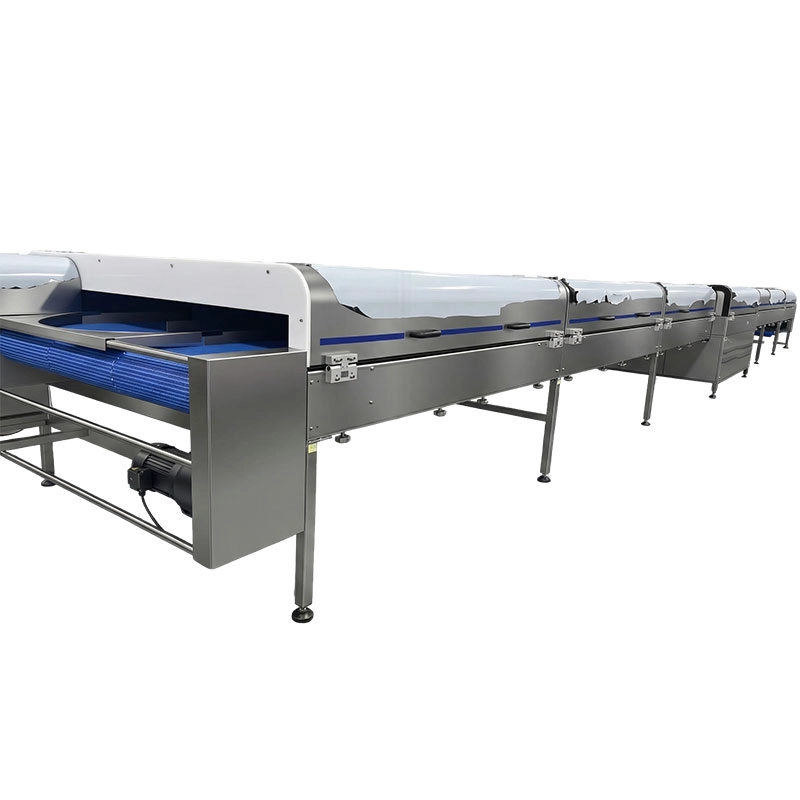
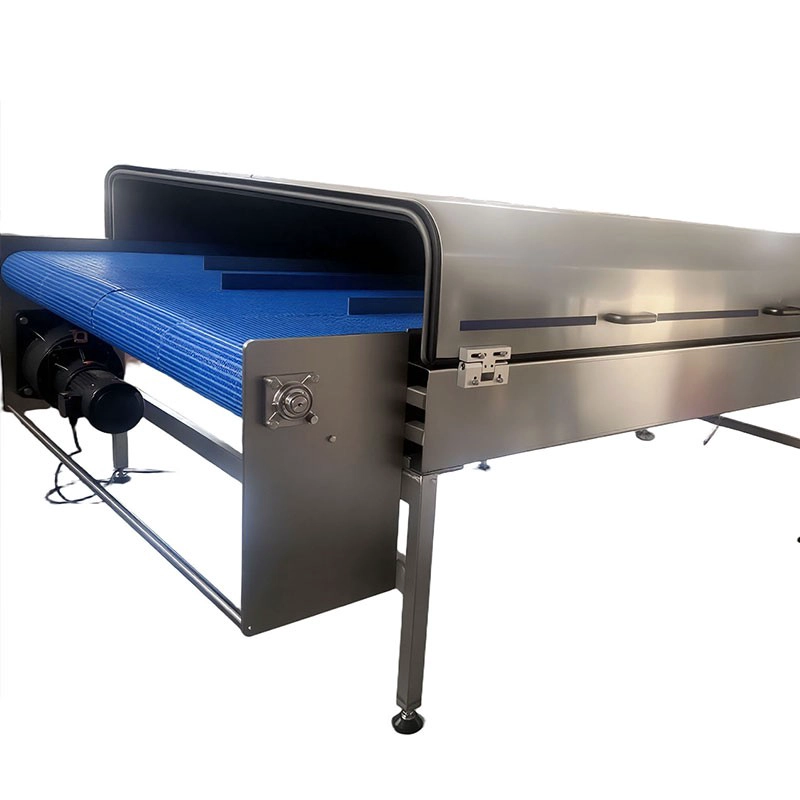
The Staged Cooling Solution of Cooling Tunnel
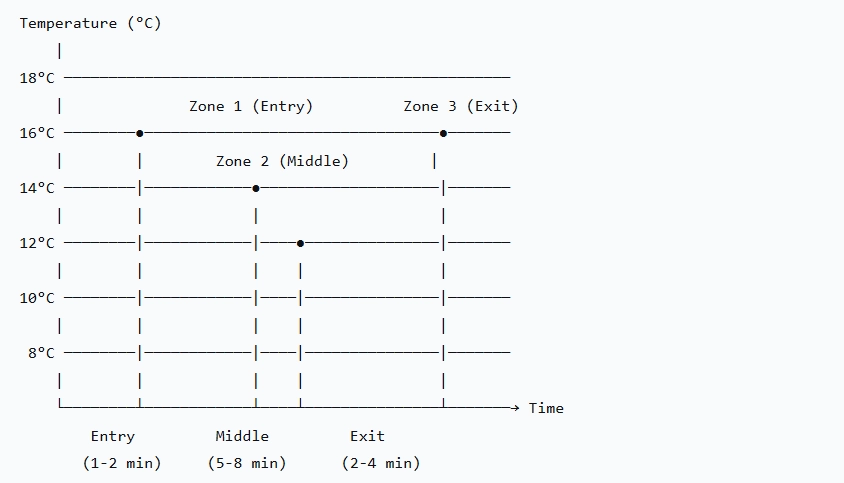
A typical cooling curve runs gentle at entry, colder in the middle, and slightly warmer at exit so the product does not hit room air cold enough to condense.
Here is the standard three-zone cooling curve in visual form:
Zone-by-Zone Breakdown
Zone 1 — Pre-cooling (Entry): 15–18°C
Duration: 1–2 minutes
Air velocity: 0.5–1.0 m/s
Relative humidity: 45–50%
Purpose: Initial temperature reduction without surface solidification
The science: This zone initiates controlled heat removal while maintaining chocolate surface fluidity. Gentle air movement prevents surface disturbance before initial crystallization begins. The temperature remains above the chocolate solidification point (approximately 15°C for milk chocolate, 17°C for dark chocolate) to prevent premature skin formation.
This zone allows the heat from the core to escape and typically requires mild airflow. Think of it as preparing the chocolate for what comes next — not shocking it into submission.
Zone 2 — Primary and Secondary Cooling (Middle): 8–12°C
Duration: 5–8 minutes total (split across primary and secondary)
Air velocity: 1.0–2.5 m/s (increasing as surface strength develops)
Relative humidity: 35–45%
Purpose: Form V beta crystal growth and complete shell solidification
Primary Cooling (12–14°C): Establishes Form V beta crystal nucleation sites across the chocolate surface. Temperature control precision within ±0.5°C maintains uniform crystallization throughout the product stream.
Secondary Cooling (8–12°C): Completes chocolate solidification through the entire coating thickness. Temperature gradients between surface and core drive crystallization progression inward. Air velocity increases as surface strength develops, enhancing heat transfer without appearance defects.
This middle zone further cools and completely solidifies the product. It is where the bulk of crystallization happens — but only after the product has been properly prepared in Zone 1.
Zone 3 — Final Cooling / Exit Rewarming: 14–18°C
Duration: 2–4 minutes
Air velocity: 1.0–2.0 m/s
Purpose: Core temperature equilibration and condensation prevention
This zone equilibrates temperature throughout the product cross-section and prepares it for ambient conditions. Controlled temperature increase from Zone 3 prevents condensation formation when products exit the tunnel.
The third or last zone still cools the product while also increasing the temperature above that of the dew point of the packaging room. If the exit temperature of the product is below the dew point of the room, the humidity from the environment could condense on the surface of the coating, potentially resulting in drying marks or sugar bloom.
Critical rule: At the cooling tunnel exit, the ambient dew point must be below the product surface temperature. Typical target: product exit temperature 12°C → ambient dew point ≤ 8°Cdp.