





















The Four Ways a Cooling Tunnel Destroys Perfect Tempering
1. Thermal Shock: When Cold Kills Crystals
The most common and destructive mistake is thermal shock—subjecting the chocolate to a temperature drop so sudden and severe that the cocoa butter crystals form incorrectly and unevenly.
When chocolate enters a cooling tunnel that is too cold, the crystallization rate accelerates dramatically. A too-cold tunnel can cause very rapid crystallization and formation of Alpha crystals—unstable polymorphs that have no place in finished chocolate. These unstable crystals become incorporated into the total crystalline composition before the products exit the tunnel. The result? Poor gloss, tackiness, and minimum contraction upon exiting. During storage, those unstable crystals transform to the stable Beta crystal form, resulting in fat bloom on the surface.
Thermal shock is especially damaging in molded chocolates with thin shells. Excessive cooling speed forces cocoa butter to crystallize too quickly into unstable forms, increasing internal stress within the structure and making surface cracking more likely after demolding. The outer shell hardens too rapidly, trapping latent heat inside; this heat eventually migrates to the surface, bringing fats with it and causing fat bloom.
2. The Zone Trap: One Temperature Does Not Fit All
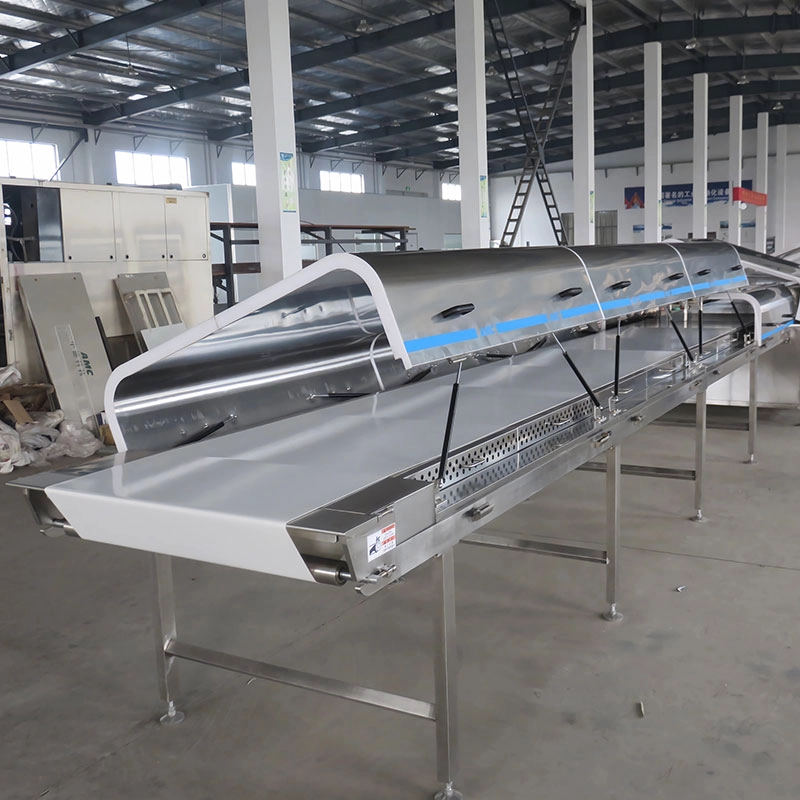
A cooling tunnel with a single cold zone instead of a graduated curve creates cracks and dull tops from thermal shock. Pull heat too fast at entry and the surface sets before the core, locking in stress that shows as cracks. Pull it too slow and unstable crystals form and the temper is lost.
The curve—not just the minimum temperature—is what sets quality. A 1–2°C variation across zones can significantly affect crystallization uniformity. One cold zone instead of a curve turns a perfect upstream product into a reject at the last stage.
3. The Dew Point Disaster: Sugar Bloom on Perfect Chocolate
This is perhaps the cruelest failure mode. The chocolate leaves the enrober perfectly tempered, enters the cooling tunnel, and emerges with a rough grey film that looks like old, spoiled chocolate.
The single most expensive tunnel mistake is letting the product surface fall below the dew point of the air around it. When that happens, moisture condenses on the chocolate, dissolves surface sugar, and dries to a rough grey film—sugar bloom, on a perfectly tempered product.
The critical rule: at the cooling tunnel exit, the ambient dew point must be below the product surface temperature. Typical target: product exit temperature 12°C → ambient dew point ≤ 8°Cdp.
In a humid climate, the tunnel and the room's humidity control are one engineering problem, not two. Cooling air must stay above the dew point, and the exit must return the product gently to room conditions.
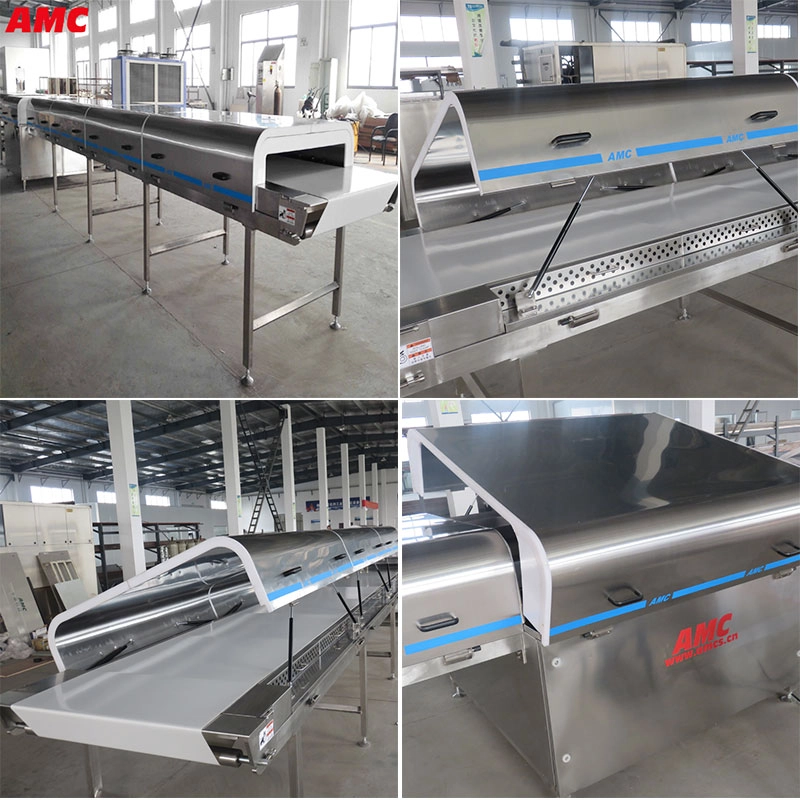
4. The Residence Time Trap: Too Fast, Too Short
Tempered chocolate needs time to set. Residence time—how long the product spends in the tunnel—is belt speed multiplied by length, and it must match what the product needs to set.
Speed up the line without lengthening the tunnel and the product exits soft, marks the conveyor, and demoulds badly. The only fix then is to slow the line, losing the throughput you paid for. A tunnel sized for today's speed becomes the bottleneck when the line scales—length is the parameter people most often under-buy.
When chocolate exits the tunnel before it has fully crystallized, the temper—however perfect at entry—is effectively lost. The product never achieves its intended snap, gloss, or shelf stability.